
Short answer: there is no single best e-commerce logistics provider — only the best fit for your product, your order volume and your customers. Israeli merchants comparing options like Orian, Tapuz Delivery, OZ Logistics and all-in-one services such as ehouse are really comparing different categories of company against their own needs. This framework gives you six criteria to score any provider on, so you can compare like with like instead of guessing.
Why comparing logistics providers is hard
Providers describe themselves differently, bundle services differently, and price differently, so a straight feature-for-feature comparison rarely works. A national courier and a full-service fulfilment house both call themselves logistics companies, yet they solve different problems. The fix is to stop comparing brands and start scoring each option against a fixed set of criteria that map to your business.
The six criteria that matter most
1. Coverage and delivery speed
Where can they deliver, how fast, and how reliably? For a store serving all of Israel, nationwide coverage and next-day capability matter; for a local niche, a fast regional courier may be enough.
2. Pricing model and minimums
Look past the headline rate. Are there monthly minimums, storage fees, per-pick charges, or long contracts? A model that scales with your actual volume protects you in slow months.
3. Technology and integrations
Does the provider connect directly to Shopify, WooCommerce, Wix or your marketplace, and give you live visibility into stock and orders? Manual spreadsheets between you and your logistics partner are a red flag at any price.
4. Service scope
Some companies only move parcels; others store your stock, pick and pack it, ship it, and handle returns. The wider the scope, the fewer suppliers you juggle — but only pay for what you will actually use.
5. Flexibility for a growing business
Can you start small and scale, or is the service built for enterprise volumes? Minimums and onboarding complexity can quietly rule out smaller stores.
6. Sustainability
Greener logistics — consolidated deliveries, recyclable packaging, efficient routing — increasingly matters to customers and can lower cost. If it matters to your brand, ask providers what they actually do, not just what they claim.

How the different players line up
It helps to recognise which category a provider belongs to before you compare:
- Enterprise supply-chain and distribution (e.g. Orian). Large-scale logistics companies handle importing, warehousing and nationwide distribution, typically suited to established brands moving significant volume.
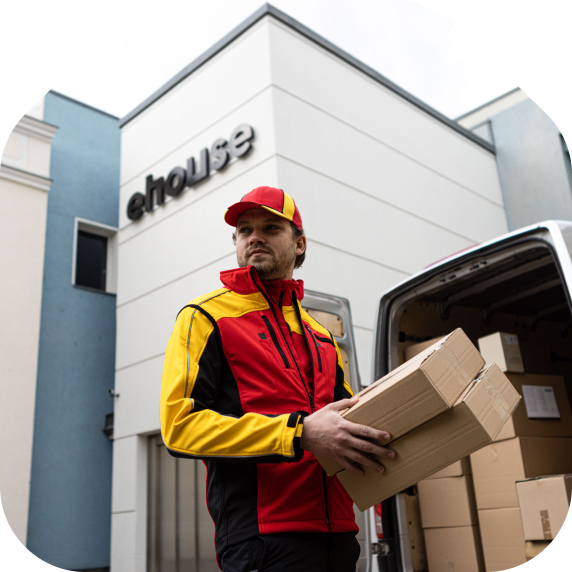
- Last-mile couriers (e.g. Tapuz Delivery). Delivery specialists focus on getting parcels from a hub to the customer's door, with broad coverage across Israel. They move your parcels, but you still handle storage and packing.
- Fulfilment and logistics providers (e.g. OZ Logistics). These take on storage and order fulfilment for online stores, covering more of the operation than a courier alone.
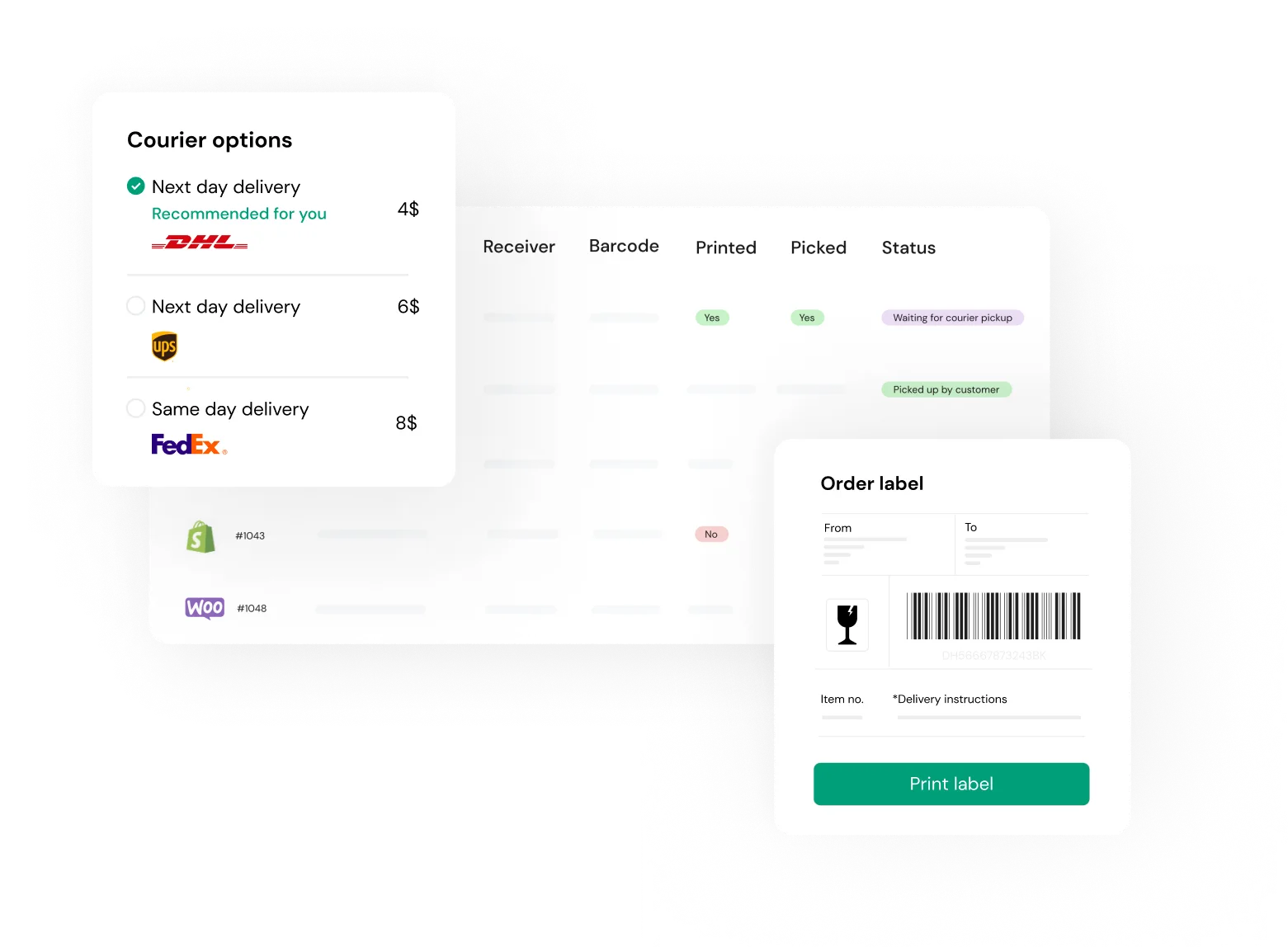
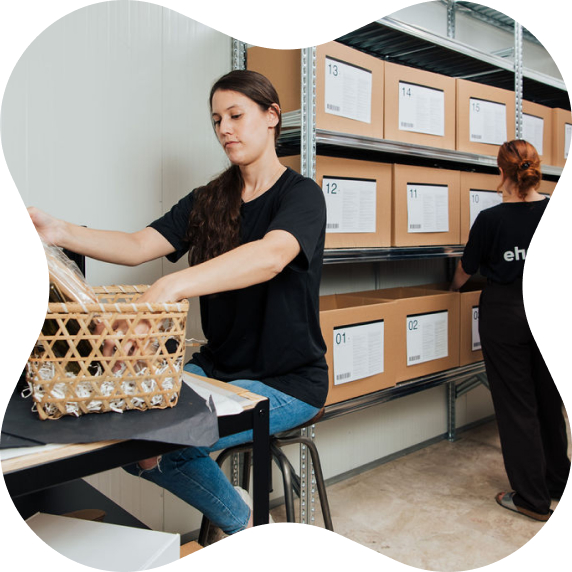
- All-in-one logistics for online stores (e.g. ehouse). Flexible storage, pick and pack, shipping and product services under one roof, connected to one dashboard — built for small and growing stores that want a single partner rather than several.
Coverage, services and pricing change over time, so treat this as a map of categories and verify the specifics with each provider directly.
Is a full-service partner worth it for a small business?
For a small store, the honest answer is: it depends on where your time goes. If you are personally packing every order and chasing several suppliers, a full-service partner that stores, packs and ships in one place usually pays for itself in reclaimed hours and fewer errors — even if the per-order price looks higher than a bare courier. If you only need parcels moved and you enjoy packing them, a standalone courier may be all you need for now. Our guide on outsourcing logistics walks through when the switch makes sense.
A simple scorecard you can copy
Give each provider a score of one to five on all six criteria above, weight the ones that matter most to you, and add them up. The winner on paper is rarely the one with the flashiest website — it is the one that fits how you actually operate. To go deeper on the model behind full-service options, read our explainer on third-party logistics.
Find your fit
If a single, flexible partner sounds right — storage by the square meter, in-house pick and pack, courier comparison and shipping, all on one dashboard — that is what ehouse is built for. Talk to the ehouse team to see how it compares against your current setup.