
When you launch an online store, three physical tasks tend to hit you all at once: photographing your products so they look good enough to buy, choosing packaging that protects them, and actually boxing and shipping every order. Most first-time sellers handle all of it themselves at the kitchen table — and that is completely fine at the start. The trick is knowing which corners you can cut early on, and which ones quietly cost you sales or margin later. Here is how experienced e-commerce sellers approach packaging, boxing, and product photography when they are just getting going.
Why packaging and photography matter more than new sellers expect
Your product photos are the entire try-before-you-buy experience online. Shoppers cannot touch what you sell, so the image does the persuading. Packaging plays a similar double role: it protects the product in transit, and the moment a customer opens the box is often the only physical brand experience they will ever have with you. Get these two right and you reduce returns, earn repeat orders, and give people something worth sharing. Treat them as afterthoughts and even a great product can underperform.
How do new sellers handle product photography?
You have two realistic paths at the start, and plenty of stores use a mix of both.
The DIY route
A window with soft daylight, a cheap sweep of white paper or a foldable lightbox, and a recent phone camera will get you surprisingly far. Shoot on a clean background, keep your angles and lighting consistent across the catalogue, and photograph the details buyers care about — texture, scale, and what is in the box. Consistency is what makes a DIY catalogue look professional, not expensive gear.
The studio or outsourced route
Once you have more than a handful of products — or you are selling something where look and feel drives the sale, like fashion, jewellery or cosmetics — dedicated product photography (often called a packshot) pays for itself. A proper studio setup delivers even lighting, true-to-life colour, and the crisp white-background shots that marketplaces such as Amazon require. Some fulfilment partners, ehouse included, offer on-site product photography so your stock can be shot in the same place it is stored, without shipping samples back and forth.
How do sellers choose packaging materials?
Right-size your boxes
Oversized boxes are the most common early mistake. They cost more to buy, invite damage because the product rattles around, and many carriers now price by volumetric (dimensional) weight — so empty air literally raises your shipping bill. Keep a small range of box sizes that map to your typical orders rather than one giant fits-everything carton.
Protection that matches the product
Fragile goods need void fill or moulded inserts; apparel travels happily in a poly mailer; anything that can leak or scratch needs a bag or wrap. Match the protection to the risk instead of over-wrapping everything, which just wastes material and money.
Branding and the unboxing moment
You do not need custom-printed boxes on day one. A branded sticker, a sheet of tissue, a stamped thank-you card, or coloured tape can turn a plain mailer into a memorable unboxing for a few cents per order. Add custom packaging later, once volumes justify the minimum order quantities. A quick note on sustainability: recyclable mailers, paper tape, and right-sized boxes are increasingly what shoppers expect, and they usually cut cost at the same time — one of the rare places where the greener option is also the cheaper one.

How does boxing (pick and pack) actually work?
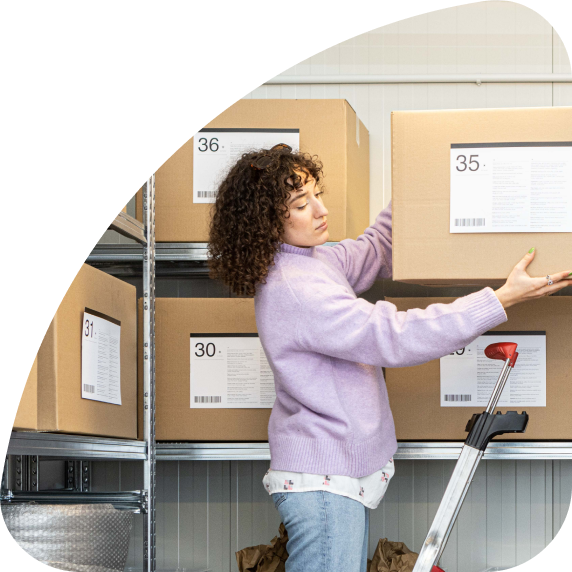
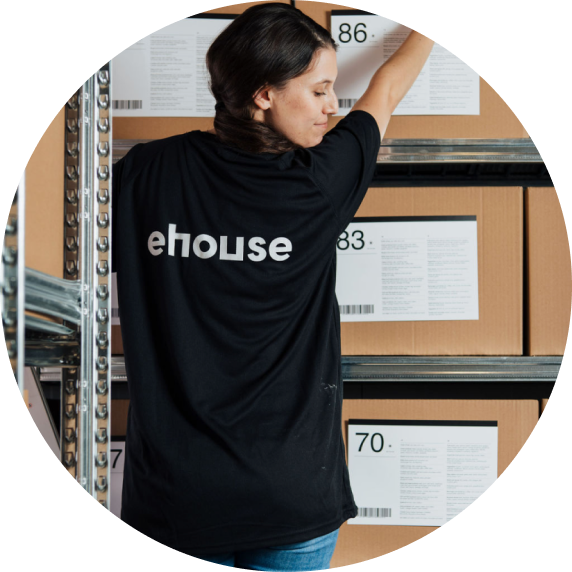
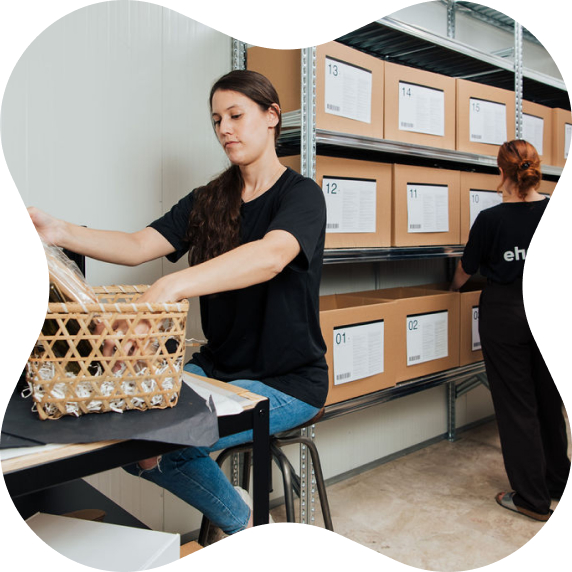
Boxing is really two steps: picking the right items for each order, then packing them safely with the correct materials and label. When you are shipping five orders a day this is a pleasant ritual. At fifty a day it becomes the bottleneck that eats your evenings. This is the point where sellers start standardising: a dedicated packing bench, pre-folded boxes within reach, a thermal label printer, and a simple checklist so every order goes out the same way. It is also the stage where many stores hand the task to a fulfilment centre and buy their evenings back.
When should you outsource packaging and photography?
There is no universal rule, but a few signals tend to line up. Consider outsourcing when packing orders is crowding out marketing and product work, when storage is spilling into your living space, when mistakes and mispacks start creeping in, or when you are ready to shoot a full catalogue properly. Outsourcing does not mean losing control of your brand — you still specify the box, the insert, the tissue, and the card. A good e-commerce fulfilment partner just executes it consistently, at volume, so the unboxing looks the same on order number five and order number five thousand.
Bringing packaging, photography and shipping under one roof
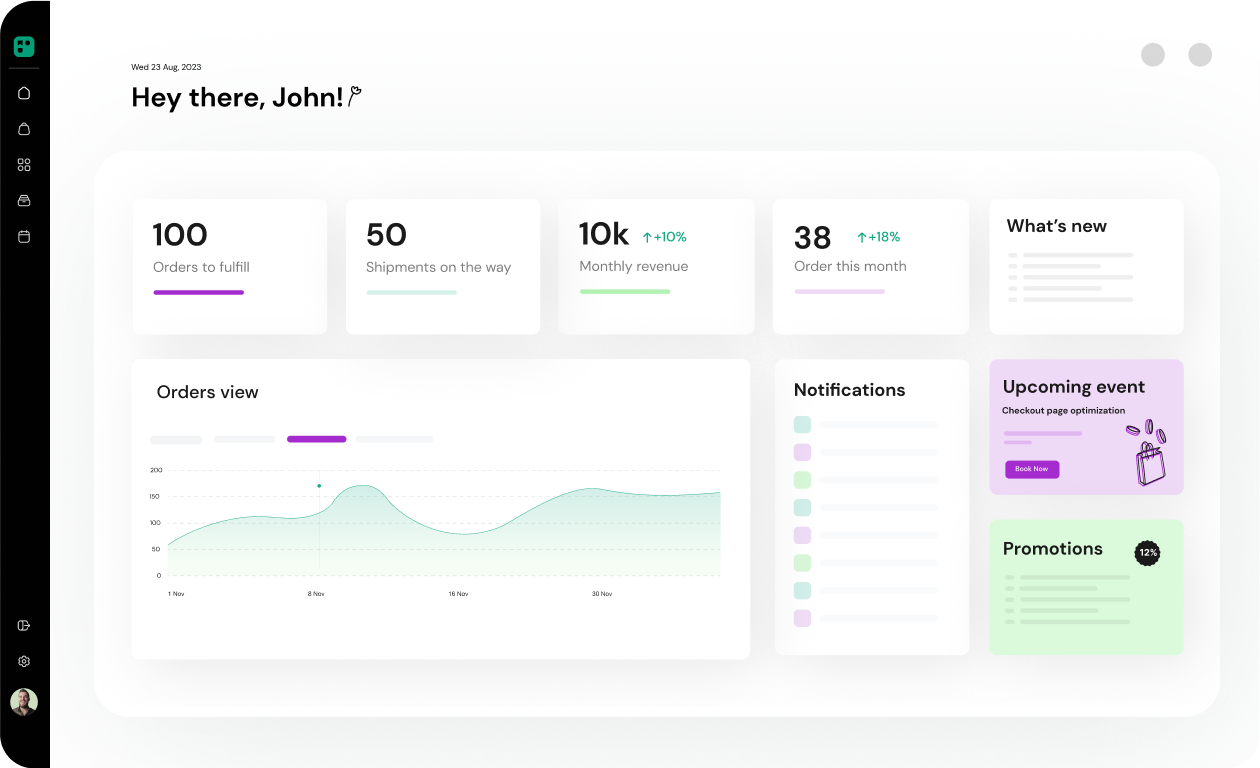
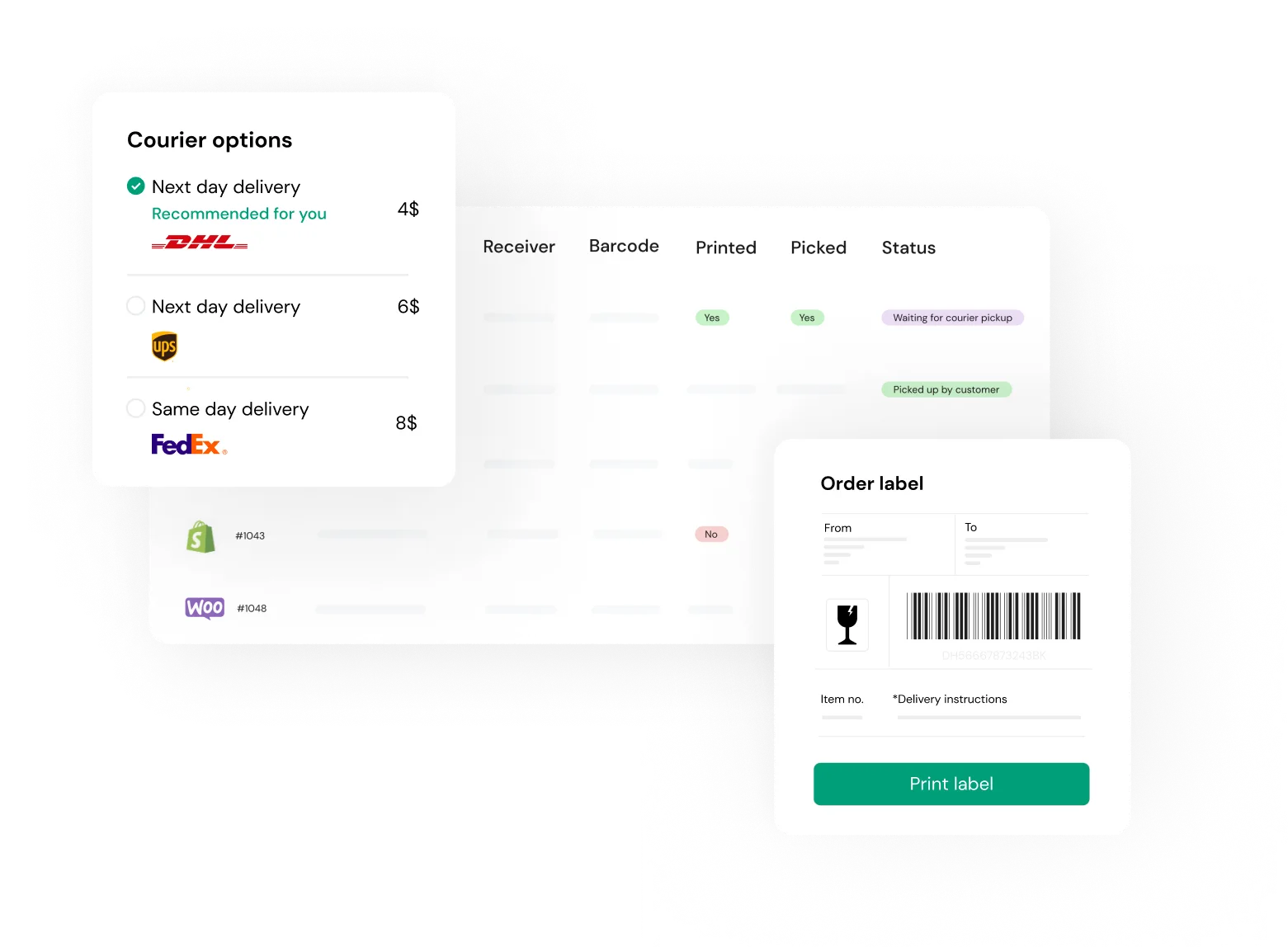
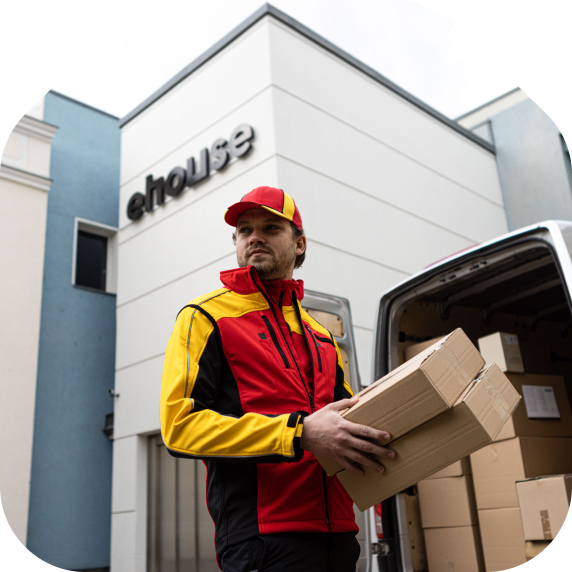
The reason these three tasks feel overwhelming at the start is that most sellers juggle three different suppliers for them. Handling photography in one place, buying packaging somewhere else, and coordinating shipping with a courier separately is a lot of moving parts for a small team. That is the gap ehouse is built to close: flexible storage, packaging materials, on-site product photography, and pick-pack-ship all live in the same building, connected to one dashboard. Your stock can arrive, be photographed, stored, packed and shipped without ever leaving the house. If you are setting up these workflows for the first time, talk to the ehouse team about where to start.